Key Takeaways
- ODM = the manufacturer's proven stock formula, produced under your brand. OEM = your specification, developed and made to order.
- ODM is faster and cheaper to start; OEM is slower but builds a defensible product.
- In China, "OEM" is often used loosely to mean private label — always confirm in writing which model is being quoted.
- Before committing, verify four things: factory credentials, formula safety, MOQ, and the sampling process.
- Most successful brands follow a hybrid path: launch with ODM, migrate the winning SKU to OEM once volume justifies it.
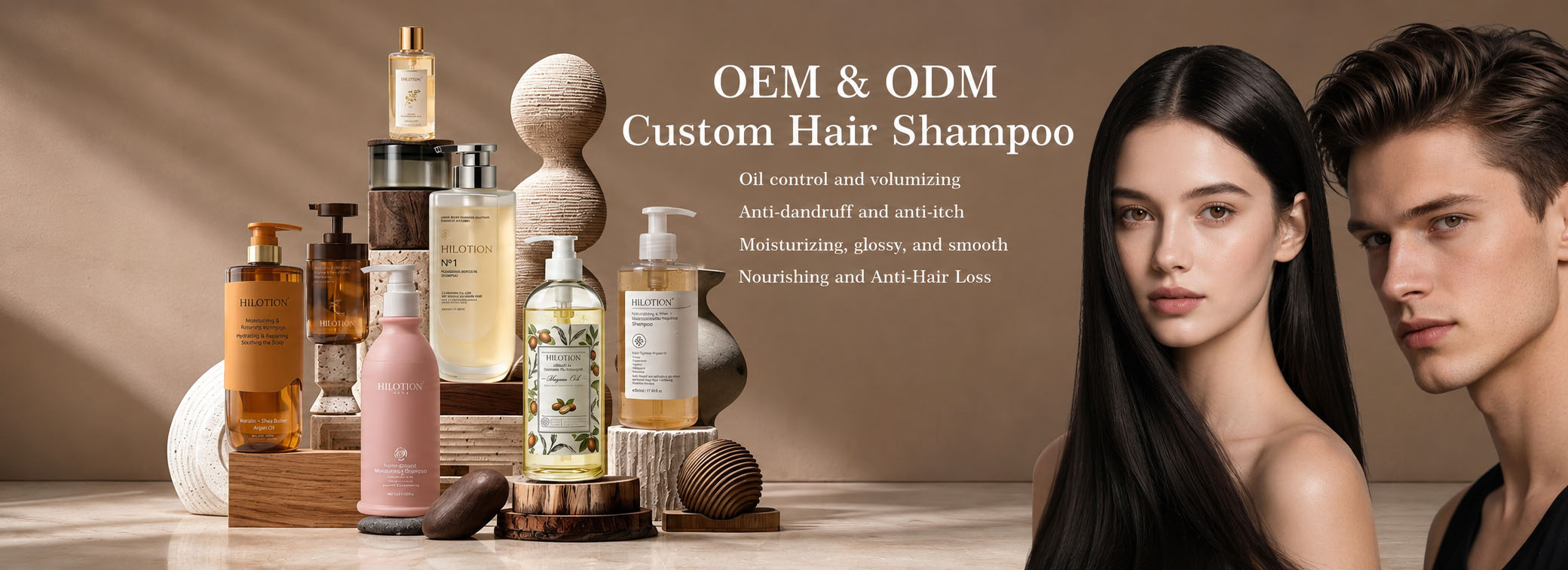
If you have spent more than ten minutes sourcing hair care manufacturing, you have met the OEM/ODM confusion. Suppliers use the terms interchangeably. Buyers nod along. Then the first quote arrives and nobody is quite sure what was agreed.
Let us fix the vocabulary — and then fix the trust problem that sits underneath it.
What the two models actually mean
ODM (Original Design Manufacturer) The manufacturer already owns a formulated, tested, stable shampoo base. You choose a base, adjust fragrance/colour/packaging, and sell it under your brand. The formula is not yours — other brands may be selling something very similar.
OEM (Original Equipment Manufacturer) You bring the specification: performance targets, ingredient preferences, claims, sensory profile. The manufacturer develops and produces it for you. The formula can be exclusive to your brand.
In practice, Chinese suppliers frequently use "OEM" to mean any private label arrangement and "ODM" to mean their stock catalogue. Always confirm in writing: "Is this your stock formula or a formula developed for us? Will it be exclusive?"
Side-by-side comparison
| Factor | ODM (stock formula) | OEM (custom formula) |
|---|---|---|
| Time to market | 2–6 weeks | 10–20 weeks |
| Development cost | Minimal | Sampling + testing fees |
| MOQ | Lower (often 500–3,000) | Higher (often 3,000–20,000) |
| Formula exclusivity | No | Usually yes |
| Differentiation | Packaging and positioning only | Product performance |
| Risk | Low — proven formula | Higher — requires iteration |
| Best for | Testing a market, line extension | Hero product, brand moat |
Before you commit: the four questions every first-time buyer asks
The vocabulary is the easy part. What actually stops buyers from placing a first order with a Chinese factory is trust. These are the four questions we hear most from sourcing visitors at our Guangzhou purchasing center — and how to answer each one properly.
1. "Is this factory real — and can it deliver?"
Do not take a catalogue at its word. A credible hair care manufacturer should be able to show you, not just tell you:
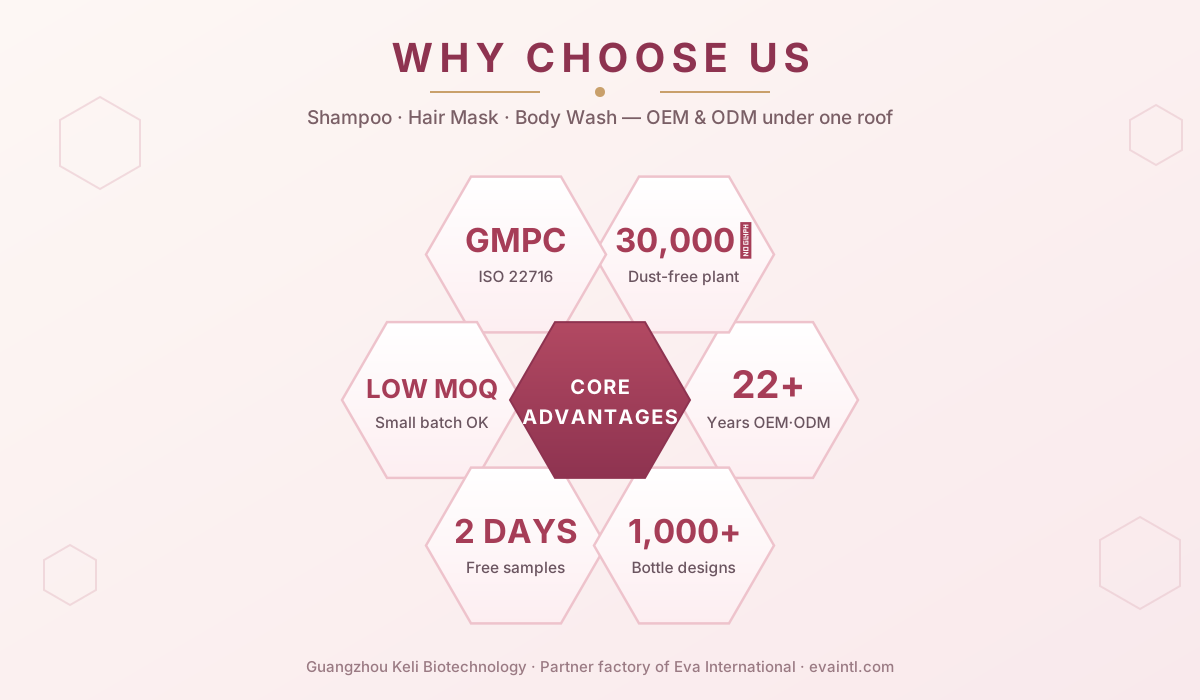
- Verified certifications. For hair care, the baseline set is GMPC and ISO 22716 (cosmetics GMP), plus ISO 9001 for quality systems. If you sell into the EU or US, ask about FDA registration, MSDS availability, and EU CPNP / REACH compliance. Exporters to the Middle East should hold CC (Certificate of Conformity) documentation.
- Physical scale. A 30,000㎡ GMP-certified, dust-free plant with 16 automated production lines and 300 skilled technicians is a different risk profile from a trading office with no plant at all.
- Real capacity. Ask for the number: a serious factory can quote maximum output per shift (80 tons per 8-hour shift is the scale you should expect from an established Guangzhou plant).
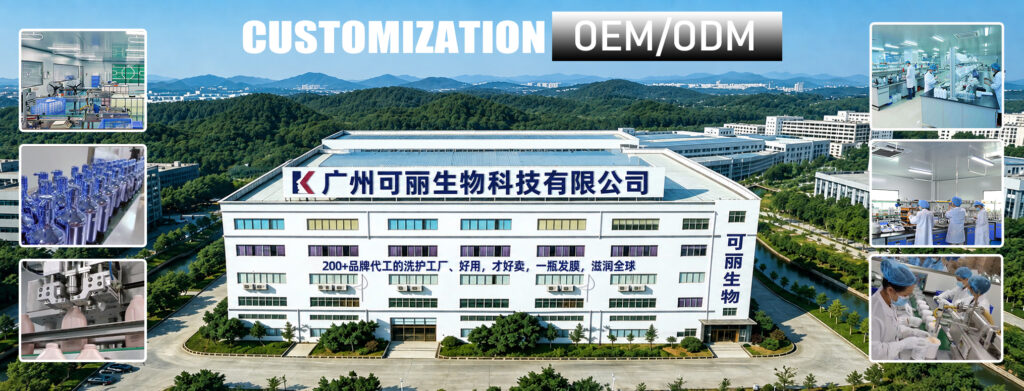
The strongest verification is still physical: walk the floor. Buyers sourcing through Eva International in Guangzhou can visit partner factories in person, or request a live video walkthrough before any money moves.
2. "Is the formula safe?"
This matters equally for ODM and OEM — a stock base is not automatically a tested base. Before sampling or ordering, confirm:
- Stability and compatibility testing has been done on the exact base you are buying (not "the formula family").
- MSDS documentation is available for every SKU.
- QC process: how many inspections happen before delivery? Established plants run five or more checks from raw material to finished carton.
- Regulatory fit for your market: EU buyers need CPNP-registered, REACH-compliant formulations; US buyers need FDA-registered production; Gulf buyers need CC documentation.
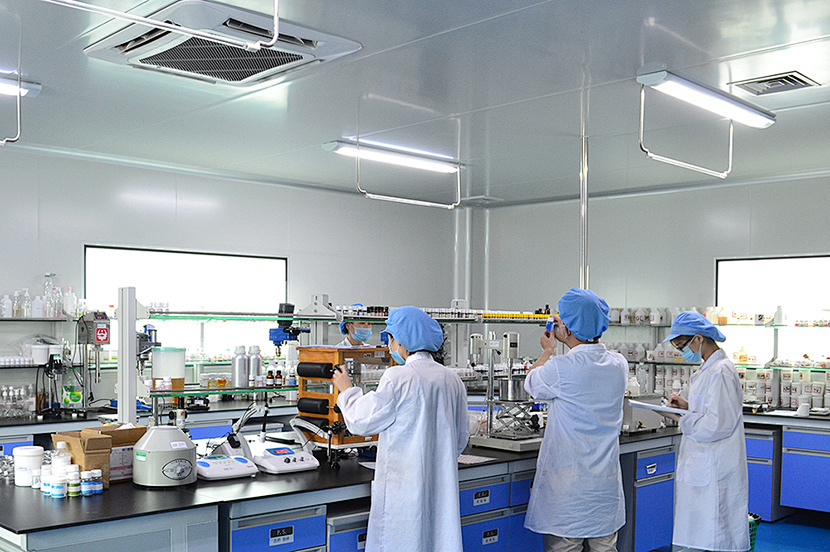
A factory that hesitates on any of these is a factory to walk away from.
3. "What is the MOQ?"
MOQ is where good intentions and cash flow collide. Two rules:
- Match the model to your stage. ODM stock bases carry the lowest MOQs — often 500–3,000 units per SKU — which is exactly why they suit a first order. OEM development usually starts at 3,000–20,000 units.
- Ask about the private label programme. Manufacturers that run structured private label services (custom formulation, packaging selection, branding & design, regulatory support) typically offer low-MOQ entry tiers with a clear scale-up path — you are not locked into a big first run to access the service.
4. "Can I sample before I order?"
Always, and you should insist on it. A disciplined process looks like this:
- Send your brief: target market, claims, fragrance direction, packaging preference.
- Receive samples of the proposed base (ODM) or first development round (OEM).
- Test internally — including on the hair types common in your market.
- Iterate (ODM usually needs 0–1 rounds; OEM runs 2–4).
- Only then confirm the production order.
Any supplier pushing you to skip straight to a production run is telling you something important about how they work.
How to choose: a four-question framework
1. Are you validating or scaling? If you do not yet know whether your audience wants a sulphate-free volumising shampoo, do not spend five months developing one. Launch an ODM version, learn, then invest.
2. Is product performance your competitive advantage? If your entire brand story is "our bond-repair complex works", an ODM base will not carry it. You need OEM.
3. What is your cash cycle? ODM ties up less capital in inventory and development. OEM requires budget for sampling rounds, stability testing, and usually a larger first production run.
4. How fast do you need to be in market? Distributor and chain-store timelines are unforgiving. ODM is often the only model that fits a 60-day window.
The hybrid path most brands actually take
The most capital-efficient sequence looks like this:
- Launch with ODM — two or three SKUs from proven bases, your branding. Validate demand.
- Learn from real customers — reviews, returns, repeat rates tell you what to change.
- Migrate the winner to OEM — take your best-selling SKU and develop an exclusive version.
- Keep the rest on ODM — do not customise what does not need customising.
This path converts market risk into product investment in the right order — and it only works if your manufacturer operates both models under one roof, so you never have to change suppliers mid-growth.
Cost and timeline reality check
| Stage | ODM | OEM |
|---|---|---|
| Brief to first sample | 1–2 weeks | 4–8 weeks |
| Sampling iterations | 0–1 | 2–4 |
| Stability / compatibility testing | Already done | 4–8 weeks |
| First production | 2–4 weeks | 4–6 weeks |
| Total to first shipment | ~4–6 weeks | ~14–20 weeks |
Common mistakes
- Assuming "OEM" means exclusive. It often does not. Confirm in the contract.
- Over-customising the first order. Two fragrance variants are enough for launch.
- Skipping stability testing on a custom formula. A formula that separates on shelf is a recall, not a marketing problem.
- Not clarifying who owns the formula. If you paid for development, the IP should be yours in writing.
- Skipping the factory visit. Two hours on the production floor tells you more than twenty email exchanges.
Ready to see the factory for yourself?
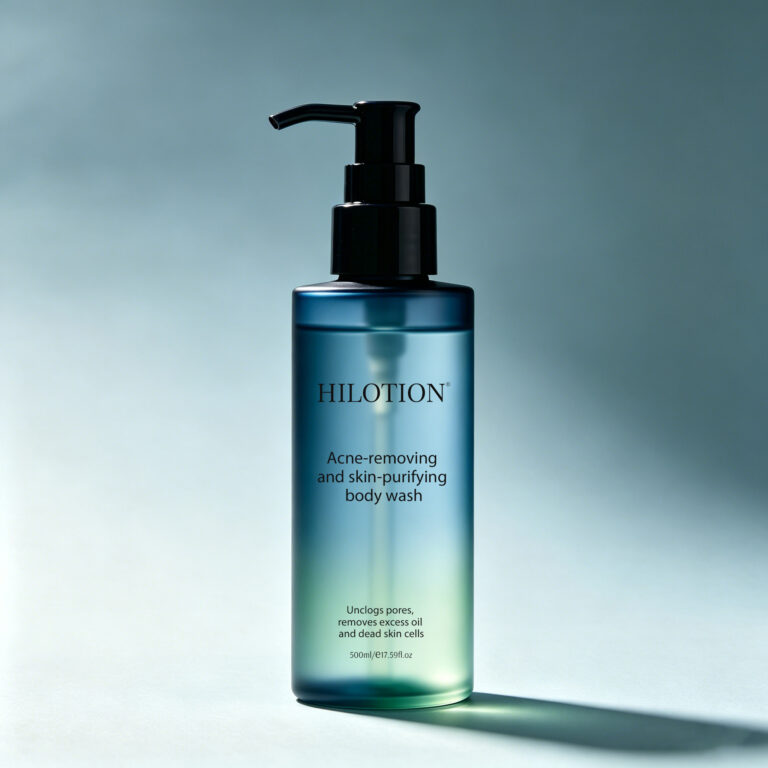
Eva International (怡发国际广场) hosts buyers from Latin America, the Middle East, Africa, Europe and North America in Guangzhou year-round. For shampoo, hair mask and body wash manufacturing, our long-standing partner factory — Guangzhou Keli Biotechnology — runs both ODM stock programmes and full OEM custom formulation at the same site, with GMPC / ISO 22716 / ISO 9001 certification, FDA registration, MSDS and CE documentation, and Saudi CC conformity for Gulf shipments.
| Channel | Contact |
|---|---|
| 🏭 Factory official website(工厂官网,看产品线与证书) | kelihaircare.com |
| 💬 WhatsApp(直接发需求,拿配方单与 MOQ) | +86 186 2006 1019 |
| 🏬 Visit us in Guangzhou(来广州看厂,现场打样) | Eva International Cosmetics Purchasing Center — evaintl.com |
Send us your brief — target market, category, estimated quantity — and you will get a straight answer on model, MOQ, timeline and unit cost, usually within one business day.
FAQ
Is ODM lower quality than OEM? No. ODM bases are usually the most tested formulas a factory has. They are less differentiated, not less safe or less effective.
Can I switch from ODM to OEM with the same supplier? Usually yes, and it is the most common path. Keep documentation from the ODM stage — it shortens OEM development.
Who owns an OEM formula I paid to develop? It depends on the contract. Negotiate exclusivity and IP ownership before paying development fees, not after.
Can I get an exclusive ODM formula? Sometimes, for sufficient volume — ask for "semi-custom": a stock base with exclusive actives or fragrance.
Do you support buyers who cannot travel to China? Yes. Video factory tours, sample shipping and photo/video production updates are standard for remote buyers. Many of our long-term accounts placed their first three orders without a single flight.
Published by Eva International (怡发国际广场), Guangzhou — a landmark beauty wholesale destination connecting global buyers with vetted hair care, skincare, makeup and nail & lash manufacturers. Featured factory: Guangzhou Keli Biotechnology Co., Ltd. — hair care OEM/ODM manufacturer with 22 years of experience. kelihaircare.com · WhatsApp +86 186 2006 1019